Complete guideline to protected and non protected tariffs in 2026
Rising electricity prices in Pakistan are putting serious financial pressure on households across the country. Many consumers end up paying unexpectedly high bills after exceeding the protected tariff limit, often without realizing the long-term impact. Once the monthly consumption crosses the allowed threshold, the consumer is moved to the non-protected category, where higher electricity rates can remain applicable for up to six months.
Having a clear understanding of protected and non-protected electricity tariffs is essential for managing energy consumption effectively. By staying within the protected limit, consumers can reduce monthly expenses, avoid additional charges, and keep their electricity bills more manageable.
Who are the Protected Electricity Consumers?
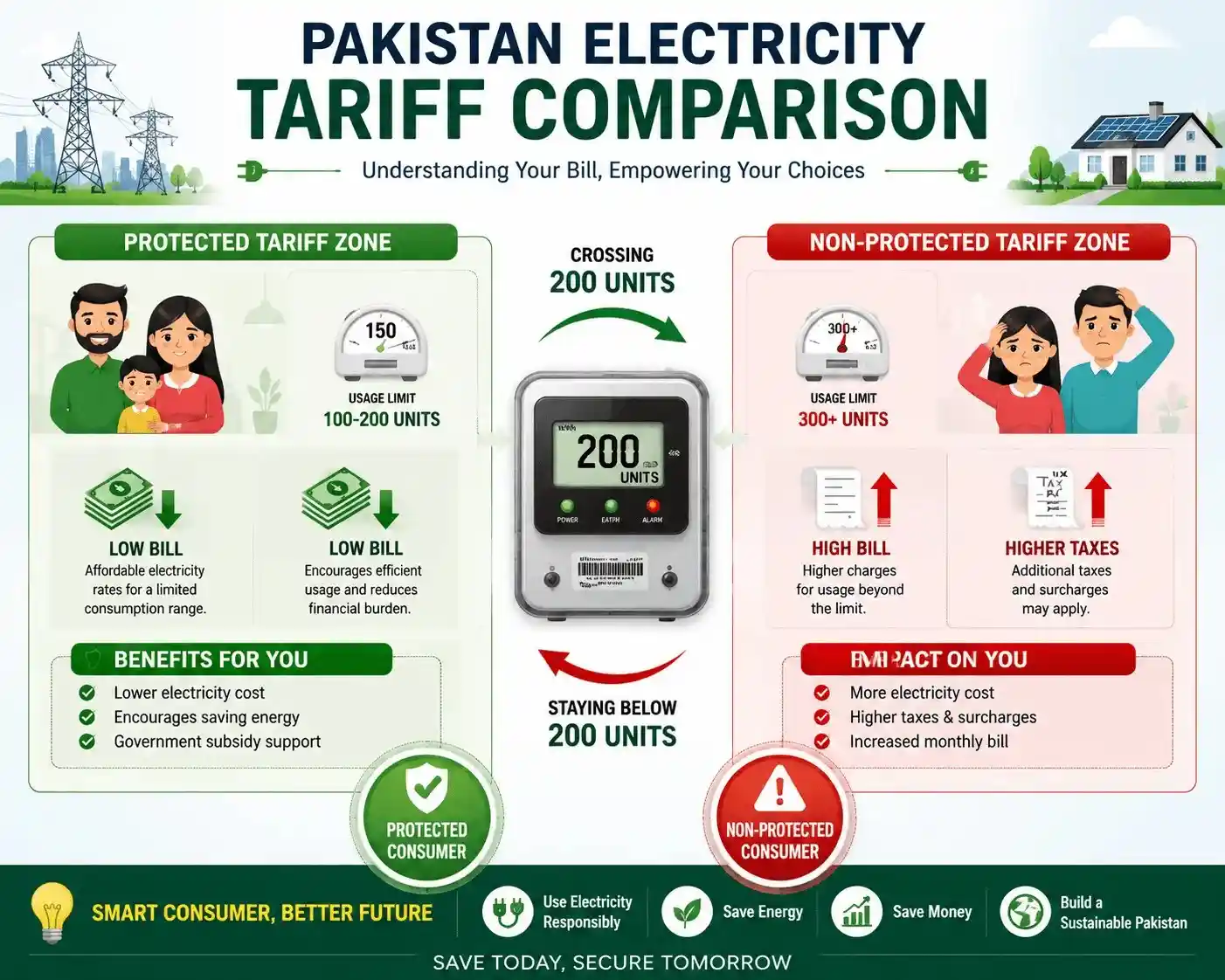
Millions of electricity consumers across Pakistan are divided into different tariff categories based on their monthly power consumption. Consumers who use up to 200 units per month fall under the protected tariff category and benefit from lower electricity rates compared to regular users. To better manage your electricity usage and stay updated on your monthly charges, you can also use the GEPCO online bill checking system to view and track your electricity bill easily.
On the other hand, households consuming up to 100 units monthly are classified as lifeline consumers. These consumers receive electricity at highly subsidized rates, which helps keep their monthly bills relatively low. The lifeline category is introduced to provide financial relief to low-consumption households and protect them from the burden of rising electricity costs.
Smart Ways to Control High Electricity Bills
Reducing electricity usage is one of the best ways to keep monthly bills under control. By adopting energy-saving habits and using efficient appliances, consumers can significantly lower their electricity costs.
Transitions to the Non Protected Tariffs
Domestic consumers under the protected tariff category who keep their monthly electricity consumption between 100 and 200 units are charged lower electricity rates. However, once monthly usage exceeds the protected limit, consumers are shifted to the non-protected tariff category, where electricity costs increase significantly.
For consumers whose electricity consumption rises above 300 units per month, higher per-unit charges and additional taxes are applied. As a result, households using between 201 and 300 units may receive electricity bills starting from around Rs. 6,000, depending on applicable taxes and fuel adjustment charges. In many cases, these higher tariff rates can continue for several months after crossing the protected limit.
Showing You a Detailed Breakdown of Protected and Non-protected Tariffs
Below mentioned the complete detail of protected and non protected tariffs:
Protected Tariff
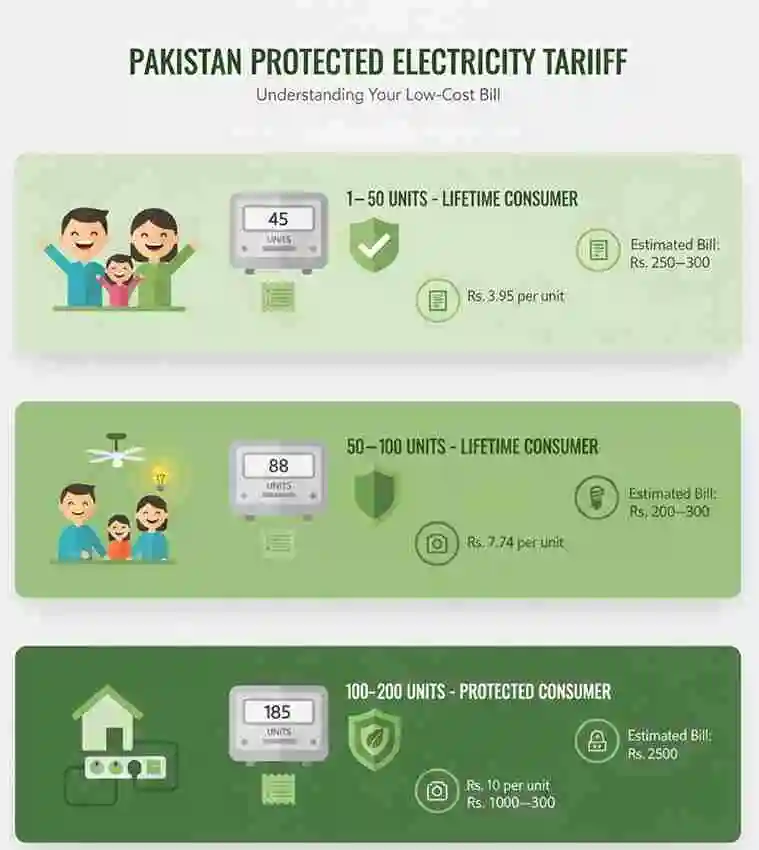
Consumers fall under the protected tariff category when their monthly electricity consumption remains within the government-defined limit. The estimated billing structure for protected consumers is as follows:
Non-Protected Tariff
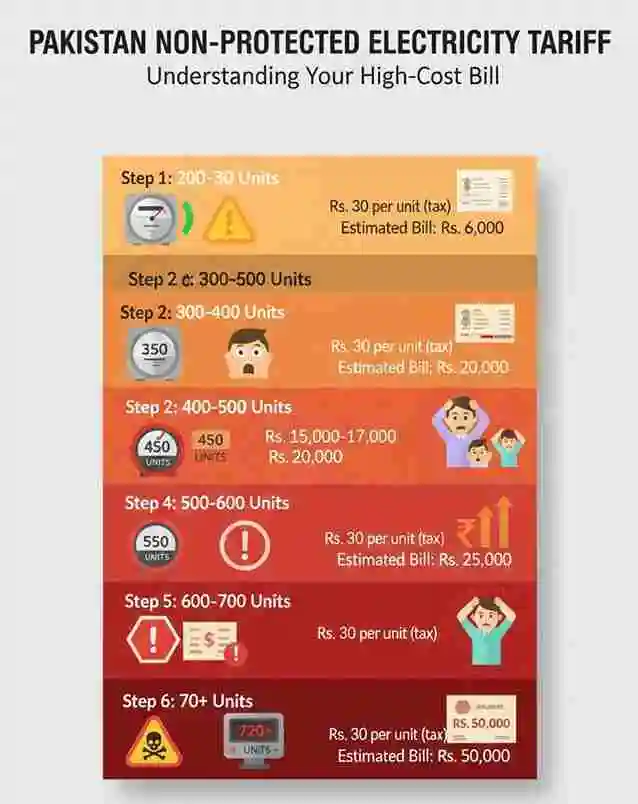
If a consumer exceeds the protected electricity limit, they are moved to the unprotected tariff category for the next 6 months. The protected limit is set at 200 units per month.
Once shifted, electricity bills increase sharply based on monthly usage slabs:
Final Words
Keeping your electricity usage within the protected limit of 200 units can help you avoid high bills and stay in the subsidized tariff category. By using energy-efficient appliances and monitoring your consumption, you can easily reduce costs and manage your monthly electricity expenses more effectively.